
By George Kaminsky
Textron Systems introduced CoreMotion on Oct. 12 at the Association of the United States Army annual meeting, a robotic control package designed to let ground vehicles accept autonomy software quickly. The company described it as a “middle layer” that sits between the autonomy software that decides where to go and the vehicle hardware that carries out the commands.
The idea targets a practical problem. Autonomy software can be written by many companies, and vehicles can be built by many others, but the two have to connect through steering, braking, throttle and power systems. Bridging that gap often takes custom engineering for each combination. CoreMotion is meant to standardize that bridge so that new software can be paired with a vehicle without starting over.
The package combines software with ruggedized hardware. That includes computers, actuators, wiring and electronics, assembled into a kit that can be installed in the field. The system handles steering, braking and power distribution, the basic functions needed to turn a command into motion. Because it is built as a kit, it can be added to vehicles that are already in service as well as to new designs.
Textron emphasized that CoreMotion is hardware- and software-agnostic. A customer is not locked into one autonomy provider or one vehicle type. That matters for the Army, which has said it wants to avoid being tied to a single vendor and wants the freedom to bring in the best autonomy software as it improves. A neutral control layer makes that choice easier by keeping the vehicle side stable while the software changes.
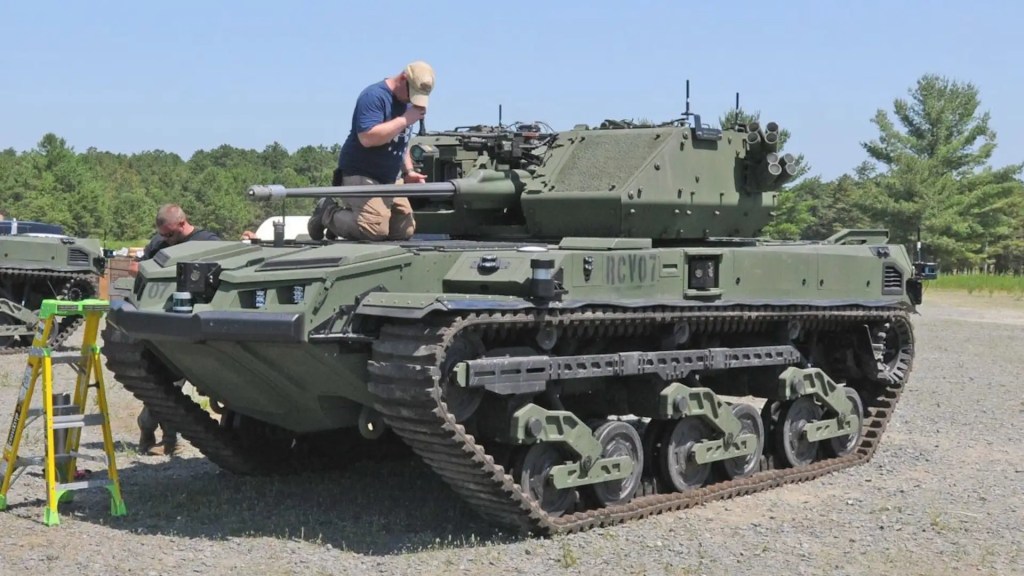
The company points to experience as the foundation. CoreMotion draws on more than 8,000 miles of operation proven on the RIPSAW family of robotic vehicles, along with more than five decades of robotics experience at Textron. RIPSAW is a tracked unmanned ground vehicle that has been used in testing by the Army, and its long track record gives the new package a body of real-world data behind it.
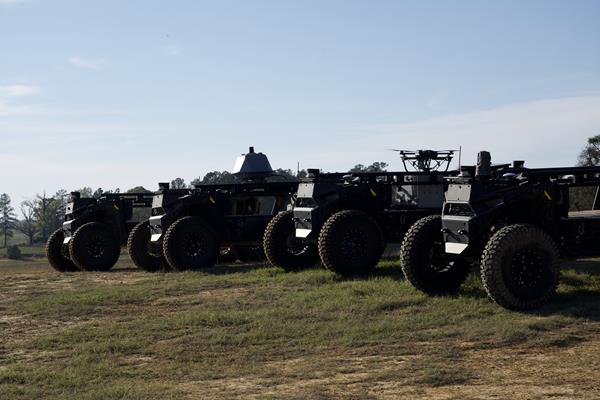
Ryan Schaffernocker, the company’s senior vice president for Air, Land and Sea Systems, said the product is intended to speed the move from autonomy software to fielded capability. In remarks reported by Janes, Sara Willett, the company’s vice president for uncrewed air and land systems, tied the product to Army efforts to develop drive-by-wire kits that can convert vehicles for autonomous operation. Those efforts reflect a service-wide interest in turning existing trucks and tracked vehicles into platforms that can be operated remotely or autonomously.
Drive-by-wire technology replaces mechanical links, such as a steering column or brake pedal, with electronic controls that a computer can command. Once a vehicle can be controlled electronically, autonomy software can take over. Kits that add this capability to a conventional vehicle are valuable because the Army already owns large numbers of trucks, carriers and other platforms. Converting even a portion of them could add autonomous capacity far faster than building new vehicles from scratch.
CoreMotion appears aimed at that path. The company says it works for new builds and retrofits, so a vehicle maker can integrate it into a fresh design, or a unit can install it on an existing machine. That flexibility lets the Army select the approach that fits each situation: purpose-built robotic vehicles for some missions, converted vehicles for others.
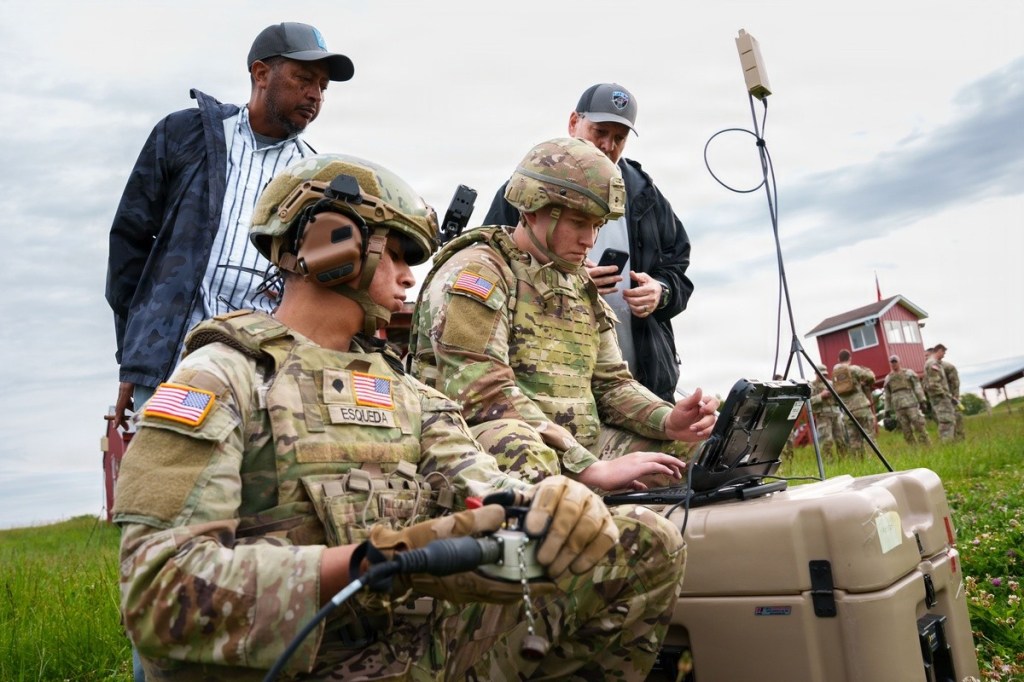
The timing is notable. The Army has been standing up new organizations and training pipelines for robotics and autonomy, including a new command focused on futures and autonomous systems and a new military occupational specialty for robotics technicians. As those pieces come together, the service needs hardware it can field and soldiers it can train to maintain it. A common control package helps with both, since technicians who learn one system can apply that knowledge across several vehicles.
Standardization also helps with sustainment. If different vehicles use the same control hardware, spare parts, repair procedures and training can be shared. That reduces the burden on units that would otherwise have to manage a different set of components for each platform. For a force that expects to operate far from its supply base, that simplicity has real value.
Textron’s announcement also underlines the growing role of the “middle layer” in autonomy. Public attention often goes to the software that sees the world and makes decisions, or to the vehicle that moves across the ground. The component in between decides how reliably a command becomes action. By offering a package with a proven record, Textron is placing a bet that reliability and ease of integration will be as valuable as new features.
For the Army’s autonomy community, CoreMotion adds another option as it moves from demonstrations to fielding. The next milestones will come as customers integrate the package with different vehicles and software, and as the service decides how quickly to expand its drive-by-wire conversions. If the approach delivers on its promise, soldiers could see autonomy arrive on more vehicles, sooner, and with a more common set of parts behind it.
Source: Textron Systems announcement, October 12, 2026; Janes.



Leave a Reply