
By George Kaminsky
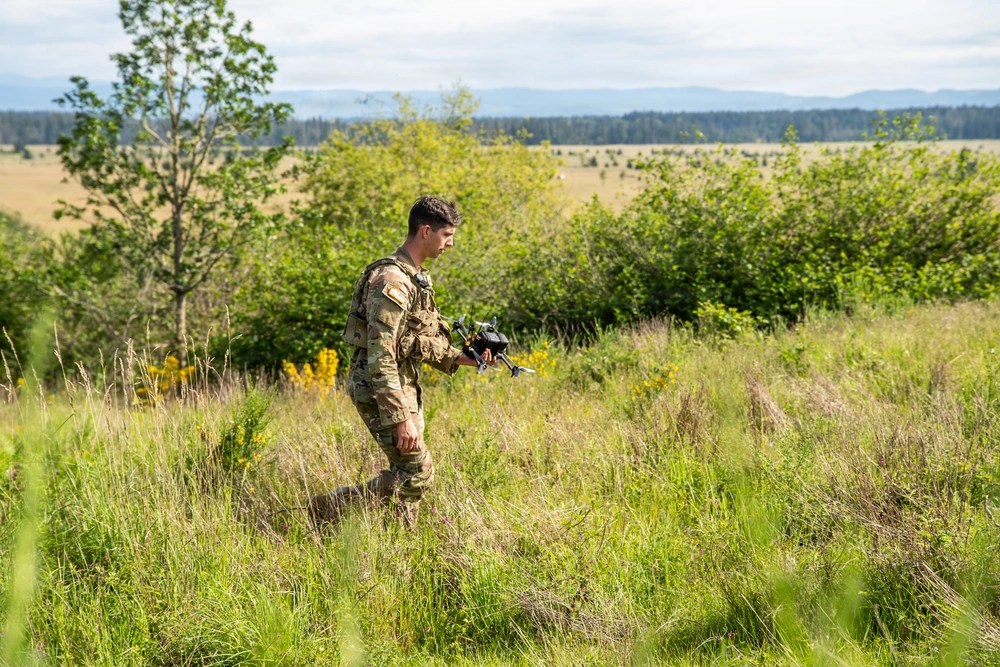
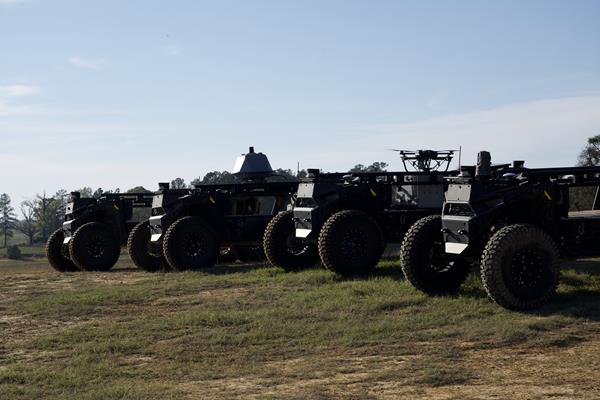
A small Pentagon team called Task Force Easy is working to change how the military adopts small drones and ground robots, and it is doing so with a stated goal that goes beyond buying equipment. Led by Col. Michael Penn, the task force focuses on small unmanned aircraft systems and unmanned ground vehicles, beginning with first-person-view one-way-attack drones.
The organization’s theme is what its leaders call adaptation dominance. The idea is simple: acquiring 1,000 drones is not the objective by itself. What matters is building an institutional and industrial engine that can keep adjusting designs, tactics and production as conditions change. A force that adapts faster than its adversary, in this view, holds the advantage.
That approach reflects lessons from recent conflicts, where drone designs evolved in weeks rather than years. Operators in those wars changed payloads, communications and tactics constantly, and the side that learned faster gained an edge. Task Force Easy aims to bring that tempo to the U.S. military through standard practices, shared knowledge and steady engagement with industry.
The task force has taken on a leading role in a major initiative. It serves as the Pentagon lead for pacesetter work under Project Swarm Forge, an effort run by the Chief Digital and Artificial Intelligence Office. Swarm Forge focuses on collaborative autonomy at the edge, meaning software that lets groups of drones or robots cooperate with limited help from human operators and without relying on distant networks. Placing the intelligence close to the machines helps in places where communications are poor or contested.
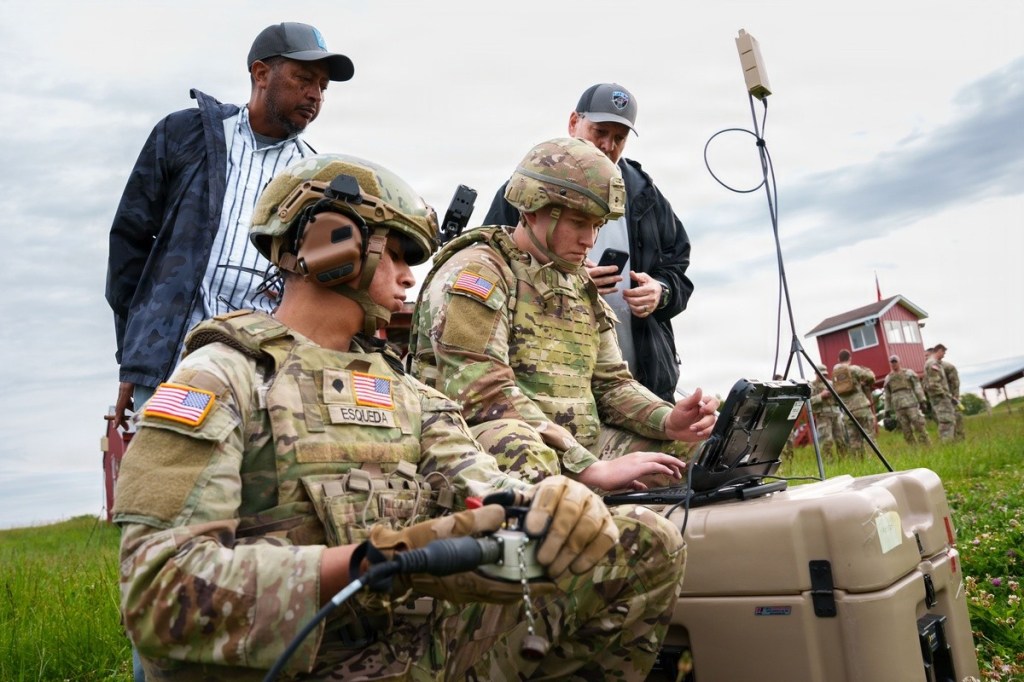
To support that work, Task Force Easy is standing up a drone team. The team is tasked with developing tactics, techniques and procedures, setting standards and supporting combat training centers. Each of those jobs fills a gap. Tactics and procedures turn new equipment into usable methods. Standards allow different vendors’ systems to work together. Support to training centers ensures that units rotating through exercises encounter and practice with the technology they will carry into operations.
The task force has an interesting lineage. It began under the Defense Autonomous Warfare Group, an organization that grew out of the Replicator initiative, which aimed to field large numbers of autonomous systems quickly. The Defense Autonomous Warfare Group has since moved into the Joint Task Force-Autonomous Warfare, which reports to DRPM-UxS, the Pentagon’s unmanned systems program office. Along the way, Defense Secretary Pete Hegseth announced on Sept. 30 the creation of AutoWarCom, a command for autonomous warfare.
That chain of organizations may look complicated, but it tells a clear story. The Pentagon is steadily moving autonomy from experimental pilot efforts to permanent structures with defined leadership, budgets and responsibilities. Task Force Easy sits inside that movement, focused on the practical work of getting small systems into the hands of units.
The emphasis on small drones and ground robots reflects where the greatest volume of activity lies. These systems are inexpensive, can be built in large numbers and can be modified quickly. FPV one-way-attack drones, in particular, have become a defining weapon of recent fighting, and the U.S. military is working to understand how to build, employ and counter them. Starting there gives the task force a concrete place to prove its methods.
The task force’s focus on the institutional engine may prove its most valuable contribution. Buying drones is relatively easy. Creating the supplier relationships, testing procedures, software updates and training pipelines that keep a fleet current is much harder. By treating those pieces as the main product, Task Force Easy is trying to avoid the cycle in which a force buys a new system, watches it become outdated and starts over.
Industry stands to benefit from the clearer structure. Companies that build small drones, ground robots or the software to coordinate them can look to Task Force Easy and its standards work for guidance on what the military needs. Common standards lower the cost of integration and make it easier for new entrants to compete, which supports a healthy supplier base.
Soldiers, too, are part of the plan. Support to combat training centers means that units will meet the technology in realistic settings and give feedback. Their experience shapes the next round of tactics and requirements, closing the loop between the field and the developers.
Looking ahead, the task force’s work will show up in several ways: the tactics that enter training, the standards adopted by vendors and the performance of collaborative autonomy software developed under Swarm Forge. Each is a measure of whether adaptation dominance moves from a slogan to a method. For now, Col. Penn and his team have a clear mission and a growing set of partners, and the Pentagon has a focused effort aimed at making small autonomous systems a routine part of how the force operates.
Source: Pentagon and Army public statements, October 2026. Photo: U.S. Army.



Leave a Reply