
By George Kaminsky
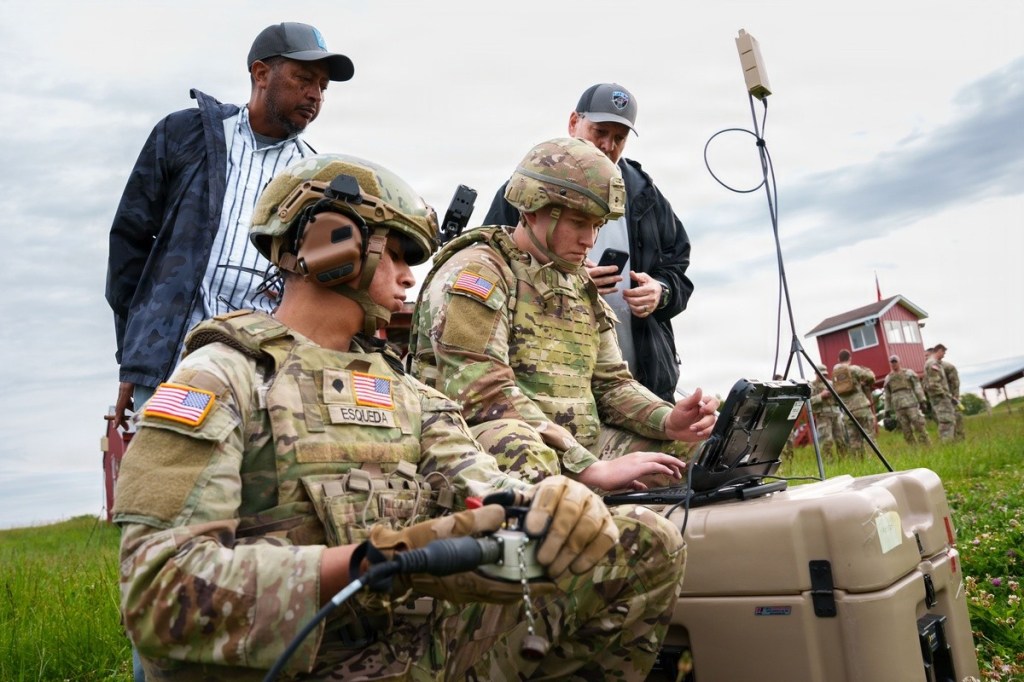
The Army is opening two Indiana training sites to companies that want to test drones and counter-drone technology. Acting Army Secretary Adam Telle announced on Oct. 28 at the Northeast Indiana Defense Summit in Fort Wayne that Camp Atterbury Joint Maneuver Training Center and the Muscatatuck Training Center will serve as permissive test sites for commercial developers.
Camp Atterbury offers more than 34,000 acres and restricted airspace that reaches up to 40,000 feet. That combination gives developers room to fly larger aircraft, test at altitude and try systems that need a wide buffer. Muscatatuck, by contrast, is a 1,000-acre urban test site, built with the kind of buildings and streets that are difficult to replicate on open ranges. Together they let companies check their equipment in open terrain and in a city-like setting.
The Army Test and Evaluation Command and the Indiana National Guard are partners in the effort. ATEC brings test expertise and range management, while the Guard operates the facilities and knows the ground. Their collaboration is meant to make it easy for companies to get on a range and start gathering data.
Telle spoke about the announcement at the summit, and other leaders added their perspectives. Maj. Gen. Larry Muennich and Maj. Gen. Pat Gaydon, along with Gen. Christopher LaNeve, commented on the value of giving industry realistic places to prove technology. The common thread was access: companies that can test sooner learn sooner, and the Army benefits when new tools mature faster.
The process for using the ranges is straightforward, and the Army designed it to keep paperwork light for smaller firms. Companies submit requests through testrange.army.mil, and an ATEC concierge team coordinates the schedule and connects the request with an appropriate site. There is one caveat that the Army was open about. Because capacity is limited, a request does not guarantee a particular site. A company asking for Atterbury could be offered another range if the schedule is full.
The Indiana sites join a growing network. In August, the Army opened five ranges to commercial drone and counter-drone testing: Dugway Proving Ground in Utah, West Cibola in New Mexico, Camp Shelby in Mississippi, Camp Grayling in Michigan and the Morocco multidomain range. With Atterbury and Muscatatuck, the network now covers a variety of climates, terrain types and airspace conditions, from desert to forest to urban.
That variety matters. A drone that performs well in the dry air of a desert may behave differently in humid woodland, and a counter-drone sensor that works in open fields may struggle among buildings. Having multiple sites gives developers a way to see how their products handle a spread of conditions before they reach soldiers. It also gives the Army data on how products perform in settings similar to those it may face.
The opening of these ranges reflects a change in how the Army works with companies. Traditionally, testing occurred after a contract was in place, and it was controlled by the government. By inviting commercial developers onto ranges earlier, the service aims to speed up the cycle in which ideas are tried, improved and tried again. Small and mid-sized companies, which may lack their own testing grounds, stand to gain the most.
Counter-drone work is a particular focus. As small unmanned aircraft spread, the Army needs reliable ways to detect, track and defeat them. Muscatatuck’s urban layout is well suited to the problem because drones in cities can hide behind buildings and move through narrow spaces. Atterbury’s large airspace allows tests of longer-range sensors and defeat systems. Allowing developers to test against real drones in controlled conditions can improve products faster than lab work.
The sites also have training value. Camp Atterbury has hosted soldiers using drones in exercises, including training with the Switchblade 600 loitering munition. Muscatatuck has already seen use by commercial drones, such as the Skydio X10, during earlier events. Having training and testing at the same locations gives soldiers a chance to see emerging technology and offer feedback.
The announcement fits into the Army’s wider drive to bring autonomy and unmanned systems into the force. New commands, new training courses and new units are all taking shape, and each depends on technology that has been tried in realistic conditions. Test ranges are the proving grounds for that technology, and expanding access increases the number of ideas that can be examined.
For Indiana, the designation brings recognition and opportunity. Communities near the sites may see new business as companies visit, and the National Guard’s role highlights the importance of state partners in national defense. For the Army, the benefit is a larger pool of tested ideas to choose from, and for developers, it is a clearer way in. Companies interested in using the ranges can begin at testrange.army.mil.
Source: U.S. Army, October 28, 2026. Photo: U.S. Army.



Leave a Reply