
By George Kaminsky
The Army has created a new command built around autonomy. Acting Army Secretary Adam Telle established the Futures and Autonomous Systems Command, known as FASCOM, on Oct. 1, and the service announced it publicly on Oct. 13 at the Association of the United States Army annual meeting. A three-star general will lead the organization.
FASCOM is not an entirely new building block. It redesignates Futures and Concepts Command and brings together several existing organizations: the Combat Capabilities Development Command, the Medical Research and Development Command and the Joint Modernization Command. Putting them under one roof is meant to connect the people who imagine future capabilities with the engineers who build prototypes and the units that test them.
The command starts with corps-level systems, giving the Army a way to place autonomous and robotic tools directly in the formations that will use them. New units are being created to carry that out. I Corps receives a fires battery and a watercraft company. III Corps gets an armored reconnaissance company. V Corps receives a breaching company, and XVIII Airborne Corps gets aerial reconnaissance and lift companies. All of them report to FASCOM, which gives the new command direct responsibility for how these formations are built, equipped and trained.
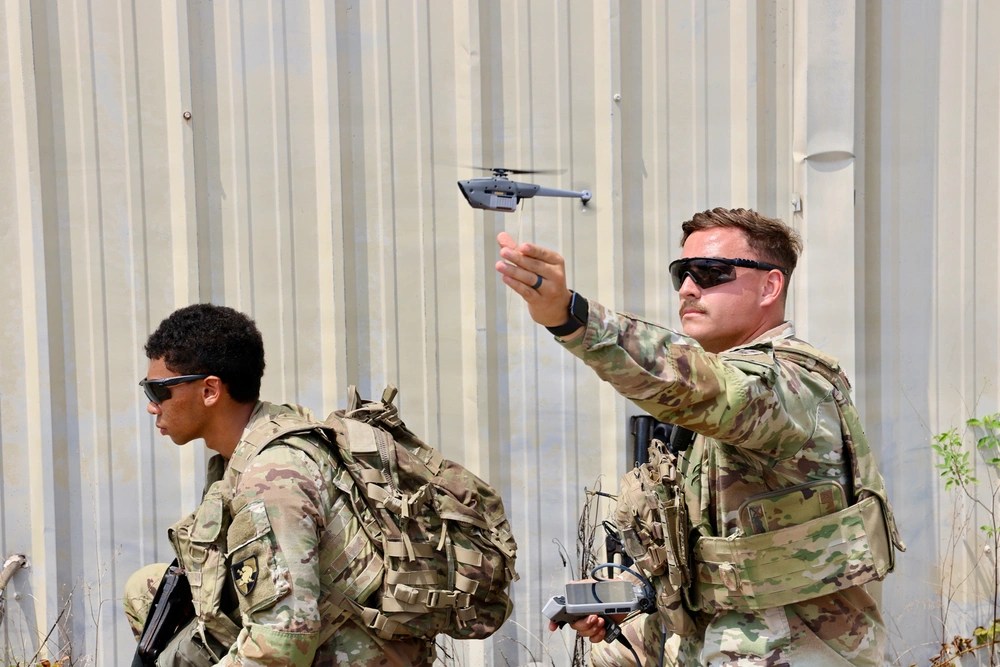
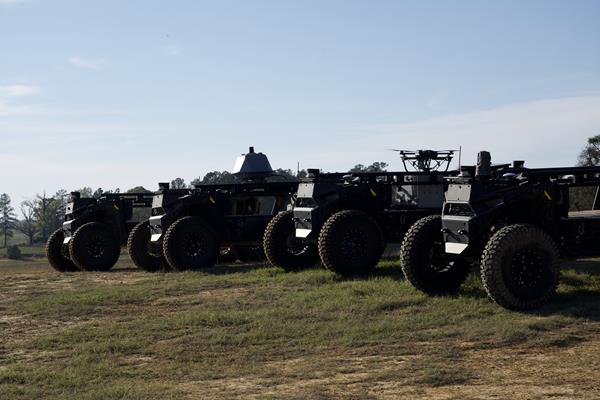
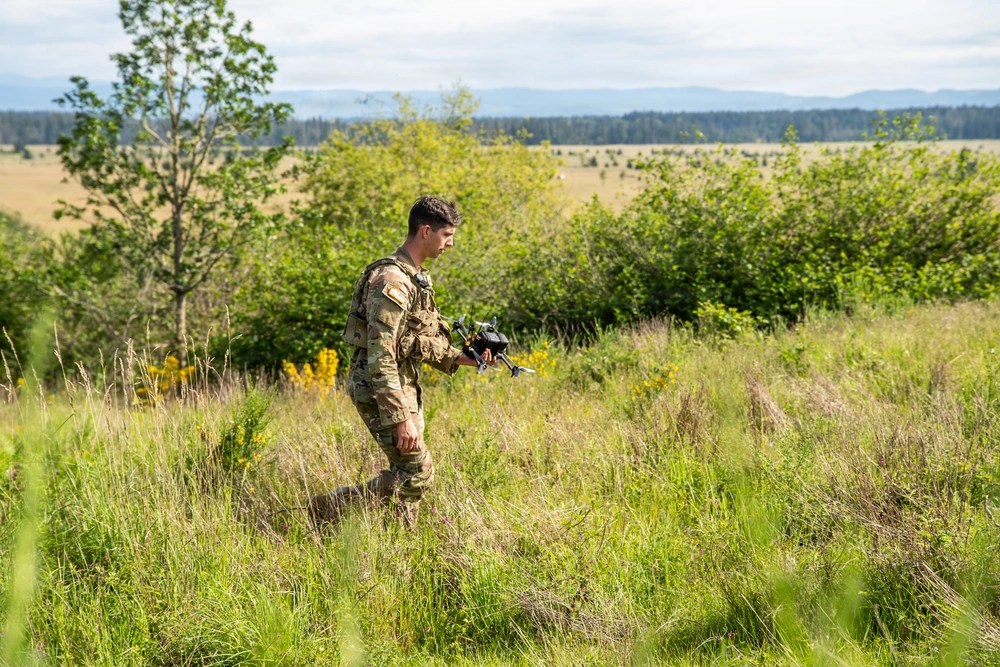
The mix of units shows how broadly the Army is thinking. A fires battery points toward unmanned or semi-autonomous launchers and munitions. A watercraft company suggests autonomous vessels for moving supplies and people. Armored reconnaissance and breaching companies reflect the kind of work seen in recent robotics demonstrations, where unmanned ground vehicles scout and clear obstacles. Aerial reconnaissance and lift companies point to drones that observe the battlefield and carry cargo.
Alongside the command, the Army named a new home for aviation autonomy. Fort Rucker, Alabama, the traditional center of Army aviation, will become the Unmanned Aircraft Systems and Autonomy Center of Excellence. The designation builds on the post’s long history of training pilots and gives it responsibility for developing doctrine, training and standards for the growing fleet of uncrewed aircraft.
A central idea at Fort Rucker is manned-unmanned teaming for rotary-wing aircraft. In this concept, aviators flying helicopters gain direct control of the sensors on unmanned aircraft. That lets a crew see over the horizon and target threats without moving into danger. The pairing combines the judgment of a pilot in the cockpit with the reach of a drone that can travel ahead and look.
Gen. Christopher LaNeve framed the effort in broad terms. “This goes beyond drones,” he said, pointing to the range of robotic and autonomous capabilities the service is pursuing, from ground vehicles to software that coordinates them. His comment captured a theme of the announcement: the goal is to change how formations fight, not to add a few drones to the existing structure.
Army Chief Technology Officer Alex Miller added a lighter note with a remark about the Coco robot, a nod to how quickly autonomous machines are becoming familiar. Gen. Tony Gibbs serves as the program executive for autonomy, giving the effort a dedicated leader inside the acquisition system.
The people side is moving as well. The first group of Robotics Technician Integrators, soldiers who hold the new 390A specialty, graduated in early October. These soldiers are trained to install, maintain and integrate robotic systems, the sort of skills that become essential once units receive unmanned platforms in large numbers. Without technicians, even the best machines sit idle, so the arrival of a trained workforce is an important milestone.
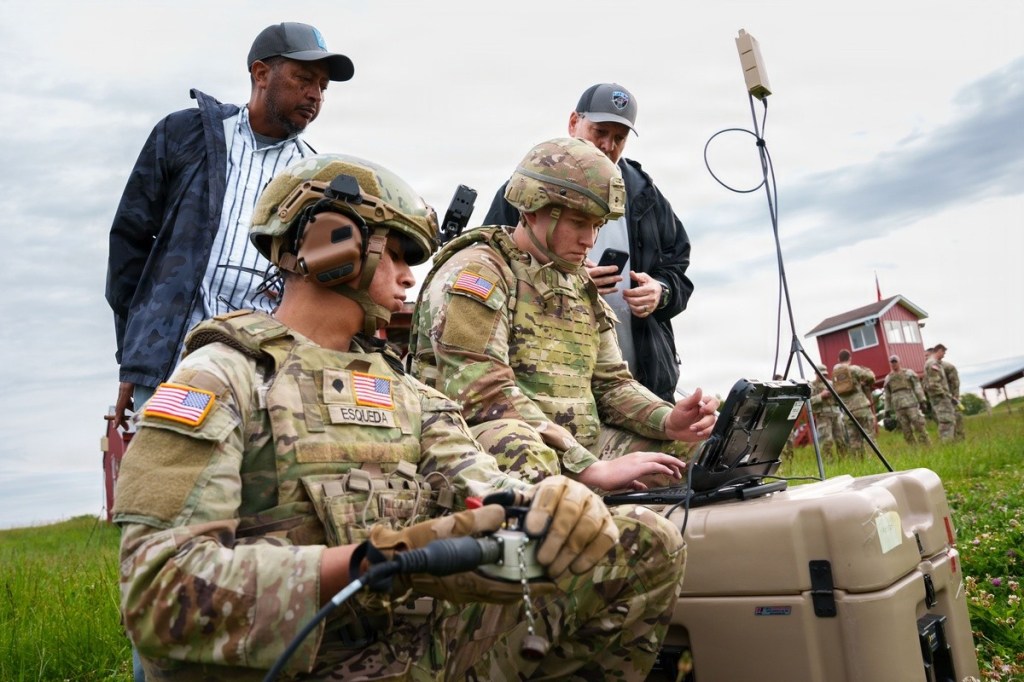
Fort Rucker is already running training aimed at this future. The post recently held the culminating exercise for its Unmanned Advanced Lethality Course, in which soldiers learn to employ unmanned systems in combat-like conditions. The course provides a view of how the Army plans to train operators: hands-on, with realistic scenarios and a focus on lethality.
Taken together, the announcements form a coherent structure. FASCOM supplies the organization and the authority to move quickly. The new units give autonomy a place in the corps. Fort Rucker supplies the center that will write the rules and teach the skills. The 390A technicians supply the maintenance backbone. Each piece supports the others.
For commanders, the practical effect is clearer ownership. When autonomy sits across many organizations, it can be hard to know who decides on a standard, who funds a prototype or who trains a unit. A single command with responsibility for futures and autonomous systems gives them a point of contact and gives industry a clearer path for proposals.
The coming months will show how quickly the structure takes shape. The new companies must be manned and equipped, the command must set priorities for its first projects, and the center at Fort Rucker must establish its curriculum. If the pieces come together as planned, the Army will have a dedicated organization steering how autonomy enters its formations, with trained soldiers and a home for doctrine to match.
Source: U.S. Army announcements, October 2026. Photo: U.S. Army.



Leave a Reply