
By George Kaminsky
The Army has chosen Lockheed Martin to advance its Future Interceptor program, awarding the company an Other Transaction agreement on Oct. 29 that carries a total value above $1 billion. Lockheed will contribute about $423 million of its own funds, and the Army will invest about $660 million, a split that shows how much confidence both sides have in the design.
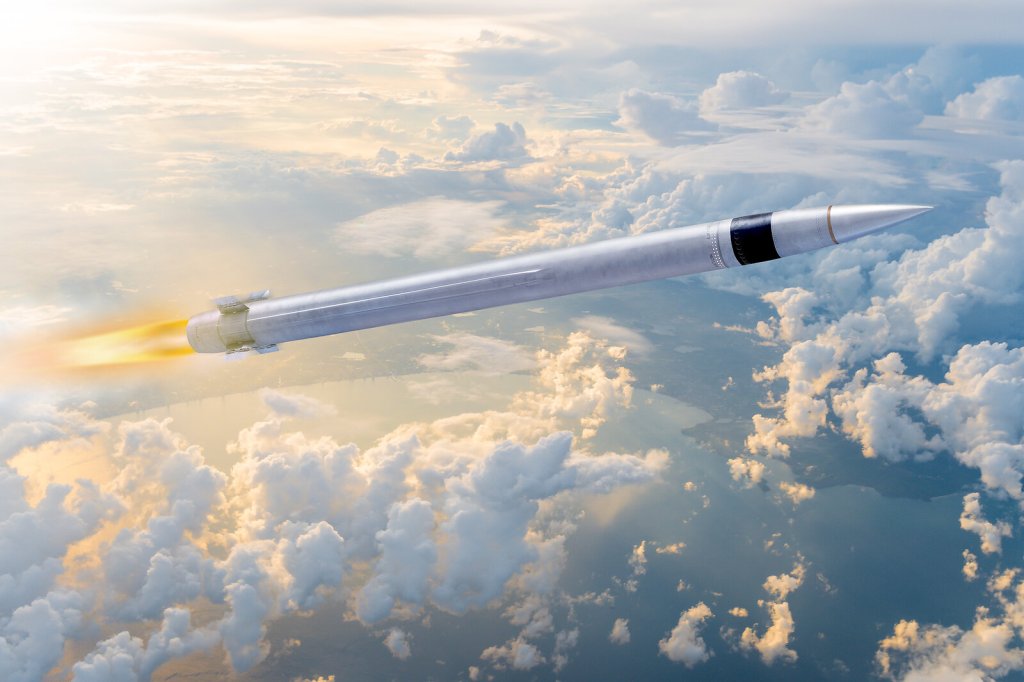
The interceptor at the center of the award is the PAC-3 Edge, which Lockheed unveiled on Oct. 9. Under the agreement, the Army will advance prototype development and testing of the missile, moving it from a concept shown to the public into hardware that will be flown and evaluated.
Lt. Gen. Frank Lozano and Brent Ingraham of Lockheed both commented on the award, describing it as a step to give the Army a more capable defender against evolving threats. The Army’s description focuses on prototype work and testing rather than a final production decision, which is typical for an Other Transaction agreement. That contracting path is designed to move quickly and let the government and industry share the cost of development.
The PAC-3 Edge is built around several new features. Its seeker comes from Lockheed’s Strigo Product Center, where the company has invested $250 million. Northrop Grumman supplies a multi-pulse solid rocket motor, which lets the missile control how it uses its energy over the course of an engagement and helps it maneuver late in flight. Lockheed has also made upgrades to the missile’s control systems.
Those improvements build on a missile family with a long record. The PAC-3 line already includes the PAC-3 ACE, the Cost Reduction Initiative version and the Missile Segment Enhancement, or MSE, which has been the workhorse of the Patriot system in recent years. The family has played a role in the conflicts in Iran and Ukraine, where Patriot batteries have faced a mix of ballistic missiles, cruise missiles and aircraft. The Edge is meant to carry that lineage forward against threats that are faster, harder to track and more numerous.
Integration is a major part of the plan. The Edge is designed to work with the Integrated Battle Command System, the Army’s network that links sensors and shooters across the air defense battlefield. It is also designed to fire from the M903 launcher used by Patriot today, from containerized launchers and from the HIMARS Flex configuration. That flexibility matters because it lets commanders place the missile on existing equipment instead of waiting for entirely new launch systems.
The HIMARS Flex option is especially interesting. HIMARS is the truck-mounted launcher best known for firing GMLRS rockets, and it is already found across Army formations and with allies. Allowing an interceptor to be launched from the same type of vehicle gives air defenders more ways to disperse, move and protect high-value assets. A launcher that can switch between strike and defense roles also eases the logistics burden for units that operate in remote places.
The schedule is clear. Testing is planned for 2027, and the Army expects deployment by 2031. Compared with the multiyear timelines of many past missile programs, that is an aggressive pace. It reflects the Army’s view that the threat is changing quickly and that a defender must keep up. By working through an Other Transaction agreement and pairing government and company funds, the program is structured to avoid the delays that can come from long, sequential development phases.
The funding split deserves attention. Lockheed’s roughly $423 million contribution means the company is putting real money behind the design, and the Army’s $660 million shows it intends to move forward. Programs that share risk this way tend to keep schedule discipline, since both parties have a stake in reaching a fielded system. It also gives the Army a clear path from prototype to a weapon that soldiers can use.
Industry partners are woven throughout the effort. Northrop Grumman’s motor, Lockheed’s seeker and the broader Patriot enterprise show how many companies and suppliers contribute to a modern interceptor. The program also arrives while the industrial base for solid rocket motors is being widened. L3Harris, which opened a new motor facility in Arkansas on Oct. 20, is building two new propulsion facilities for PAC-3, and Avio USA is breaking ground on a large plant in Virginia. More motor capacity across the country supports every missile in the family, including the Edge.
For the soldiers who operate air defense, the Future Interceptor award is a sign that the Army is investing for the long term. Patriot has been a cornerstone of the force for decades, and the Edge is intended to extend its usefulness. The combination of a new seeker, a multi-pulse motor and tighter network integration is aimed at helping crews defend against a broader range of threats with greater confidence.
Over the next year, the milestones will be test events and design reviews as Lockheed and the Army turn the agreement into flight hardware. If the program stays on its schedule, soldiers could see the PAC-3 Edge in the field before the end of the decade. Until then, the award gives the Army a funded path, a defined timeline and a missile designed to work with the equipment its units already know how to use.
Source: Lockheed Martin and U.S. Army announcements, October 2026. Image: Lockheed Martin.




Leave a Reply