
By George Kaminsky
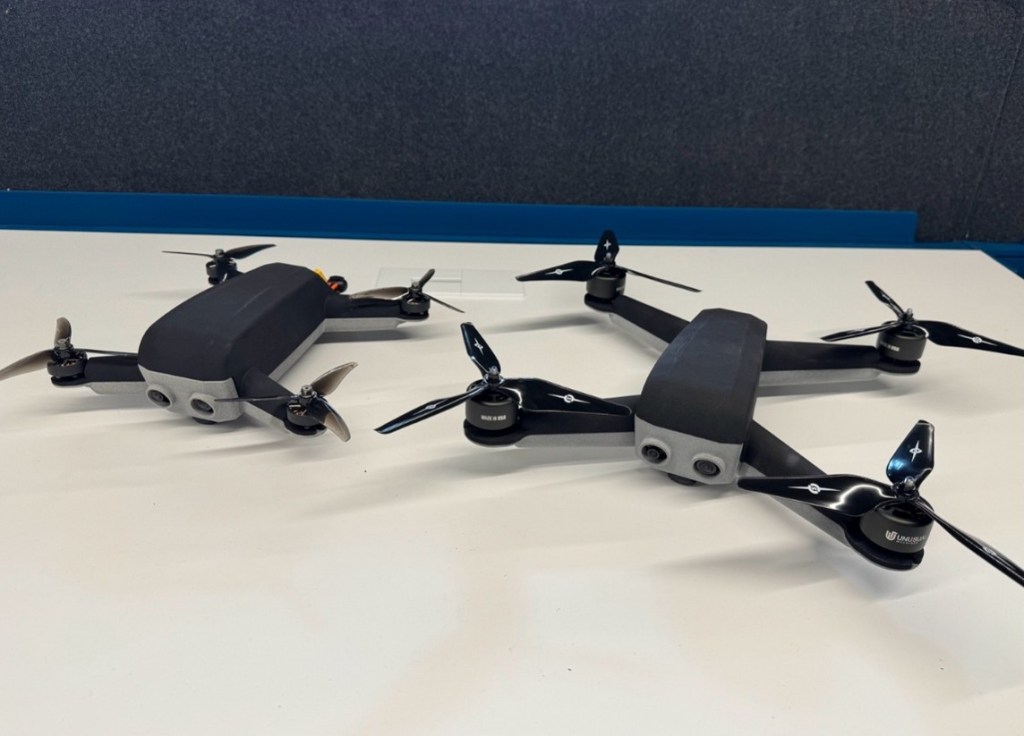
HAGERSTOWN, Md. — First Breach Inc. (NASDAQ: FBDT) has completed the first test flight of its Long Range Strike drone, the larger of the company’s two Class 1 attritable platforms. Announced October 27, the milestone puts both of First Breach’s proprietary drone designs in active flight testing, joining the Close Quarters Strike platform that is already in the air.
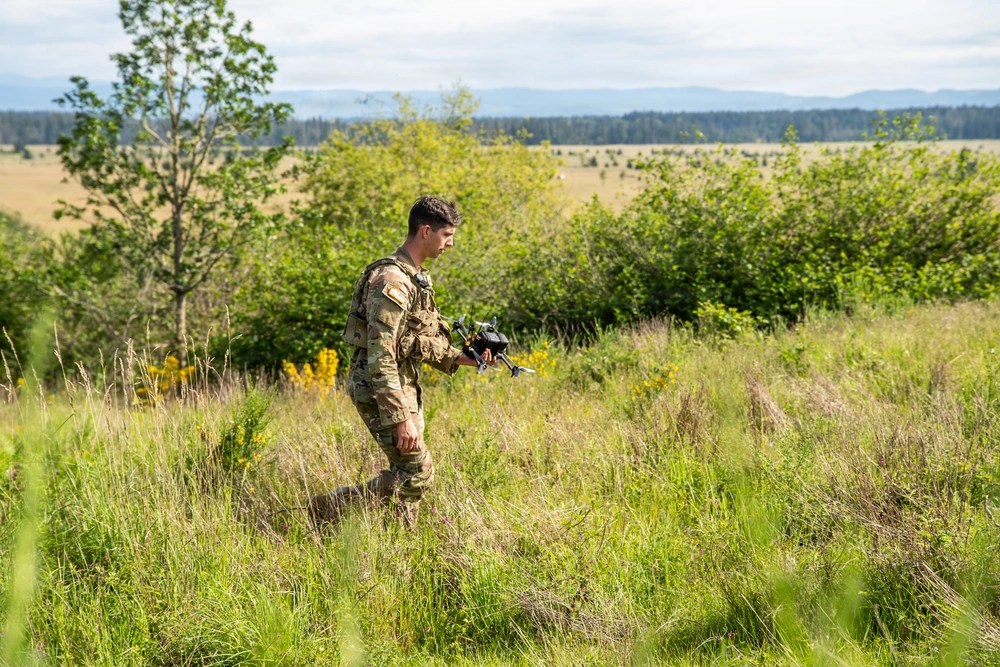
The Long Range Strike, or LRS, is a compact, man-portable unmanned aircraft system built for reach. It is designed for a range of more than 20 kilometers (about 12 miles) with a payload of roughly 1 kilogram, and its current speed is approximately 120 km/h. The aircraft weighs under 9 kilograms (20 pounds), carries propellers under 457 millimeters (18 inches), and keeps its wheelbase or folded wingspan under 350 millimeters, a footprint a single operator can carry into the field.
At that speed, the aircraft covers 20 kilometers in roughly ten minutes. That gives operators meaningful standoff distance while keeping the response time short, a useful combination for a platform of this size.
“Having both platforms in flight testing is an important step in expanding our drone product portfolio,” said Jeffrey Low, co-founder and chief executive officer of First Breach. “For the long-range mission, this is the platform the Department of War has been describing, built the way they have asked for it to be built.”
Operators fly the LRS in first-person view, with computer vision search assistance layered over map-based waypoint navigation. Onboard hardware is intended to support identification friend or foe and terminal guidance, while modular radio connectivity and GNSS-denied navigation hardware are intended to support resilience in environments affected by electronic warfare. Together, those features point to an aircraft designed for contested airspace from the start.
Layering computer vision over waypoint navigation gives operators help where it matters most: planning a route on a map, then using onboard vision to assist in searching the scene. The terminal guidance and identification friend or foe hardware add further options as the platform matures.
Supply chain is a defining feature of the design. The LRS sourcing plan calls for 100 percent non-Chinese sourcing of its battery pack, motors, power electronics, flight control system, flight computer and vision guidance system. These are the key electronic and power components that determine whether a small drone can be built at scale from trusted suppliers. The platform was also designed from inception for high-volume robotic assembly, an approach aimed at consistent quality as production volumes grow.
For buyers focused on supply chain security, that sourcing plan is a notable selling point. Building the battery pack, motors, power electronics and flight electronics from non-Chinese sources addresses a requirement that defense customers have emphasized, and First Breach is building it in from the start of the design.
The two aircraft are built around common parts. “These two aircraft share components, share a supply chain, and share a production line,” Low said. The arrangement is intended to support manufacturing efficiency and scalable assembly as First Breach moves toward commercialization, and, he said, that was the plan from the start.
The “Class 1” and “attritable” labels place the LRS in a category that has drawn growing attention across defense. Class 1 refers to the smallest group of unmanned aircraft, generally under 20 pounds, and attritable systems are meant to be affordable and producible enough to be fielded in numbers. A shared production line and robotic assembly are central to that idea, since volume and consistency are what make small, numerous aircraft practical.
The LRS and the Close Quarters Strike platform give First Breach two distinct products, one aimed at close-quarters work and one at long-range missions. The company continues to target completion of its initial prototypes in the fourth quarter of 2026 and the start of scaled production in the second quarter of 2027. With the LRS now flying, both platforms are moving through testing on the same timeline, with details on upcoming test milestones to come.
First Breach is an ISO 9001:2015 certified, American-made defense technologies company that manufactures match-grade ammunition components and finished ammunition in-house at its Hagerstown, Maryland, facility. There it produces brass cups, casings, projectiles, lead cores, lead wire and completed ammunition under rigorous quality control standards. Its drone strategy extends that vertically integrated approach into U.S.-made unmanned systems, drawing on engineering, robotics, ISR and sensor technologies, and precision manufacturing to serve defense, homeland security, law enforcement and commercial customers at home and abroad.
For a company with deep roots in ammunition manufacturing, a second drone in the air marks a clear step into unmanned systems. With the Close Quarters Strike and Long Range Strike platforms both flying, First Breach now has two complementary aircraft in testing, built on the same components, the same supply chain and the same production line, and aimed at a production start in 2027.



Leave a Reply