
By George Kaminsky
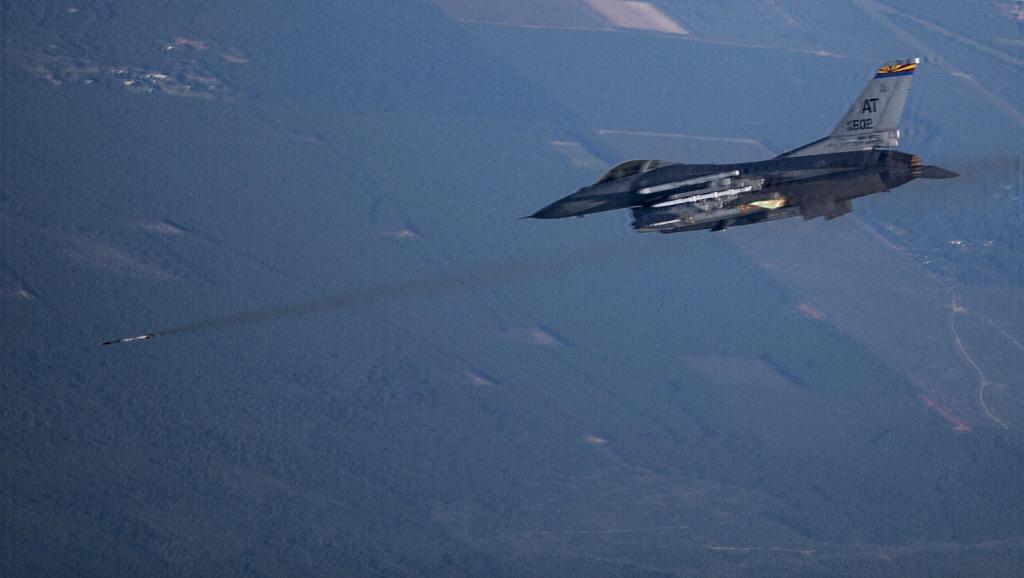
The Pentagon and BAE Systems have agreed a framework to keep the Advanced Precision Kill Weapon System, known as APKWS, in production at up to 25,000 guidance kits a year for as long as seven years. The agreement was announced on October 19 and is aimed at one of the cheapest ways the U.S. military has found to shoot down drones: a laser-guidance kit that turns an unguided 2.75-inch rocket into a precision weapon.
The wording matters. This is a framework, not a firm contract. Congress must still approve and fund the purchases, and the two sides still have to negotiate the multiyear contracts that would sit under it. Neither the Pentagon nor BAE has disclosed a dollar value, so the announcement says how many kits could be built and says nothing about what the government would pay for them.
Defense News reported that the 25,000-a-year figure is for U.S. demand and that output could rise to 35,000 kits a year for allies, though that extra capacity depends on partner nations formally requesting kits through the Foreign Military Sales program. BAE’s own release describes the agreement as raising production capacity to as many as 35,000 kits a year and calls it surge-ready. The company builds the kits at plants in Hudson, New Hampshire, and Austin, Texas, and says it has invested in manufacturing, materials, workforce and its supply chain.
Michael Duffey, the Pentagon’s undersecretary for acquisition and sustainment, said that by securing multiyear demand the agreement keeps production lines running at capacity. Tom Arseneault, president and chief executive of BAE Systems Inc., called APKWS proven, reliable and affordable precision at scale, and said the agreement shows why sustained investment in critical munitions matters for readiness.
APKWS is fielded by the Air Force, Army, Marine Corps and Navy. It can be fired from aircraft, ships and ground vehicles, and BAE describes it as multi-mission, usable in air-to-surface, surface-to-surface, surface-to-air and air-to-air engagements. It is the only U.S. program of record for guided 2.75-inch rockets. The reason it is in the news is counter-drone defense. Shooting a cheap drone with a missile that costs many times more is a trade that favors the attacker, and a guided rocket is one of the few interceptors that changes that arithmetic. BAE said in February that it had delivered its 100,000th kit, so the product is well past the prototype stage.
The new framework follows a long run of deals that give munitions makers something they have rarely had: a promise of demand that lasts several years. Earlier this year Lockheed Martin agreed to more than triple production of the PAC-3 MSE interceptor, BAE and Lockheed agreed to quadruple output of THAAD seekers, and a January THAAD framework led to a June contract worth more than $35 billion. APKWS is a far smaller program than those, but it fits the same pattern. Frameworks like these tell suppliers to hire, order long-lead parts and expand lines before the money is final, which is why the unresolved funding question is the main caveat on all of them.
Other customers are already lining up. A Navy contract for APKWS, covering up to 55,000 kits for the Navy, Army and foreign buyers, is worth up to $1.74 billion and is expected to run through December 2031. In July the State Department approved a possible sale to Saudi Arabia of up to 20,000 kits, valued at about $1.96 billion and split evenly between air-to-air and air-to-ground versions. Italy is weighing a purchase of 5,031 kits for counter-drone defense. The Saudi item is an approval of a possible sale, not a signed contract, and the Italian purchase has not been decided.
Put those numbers side by side and the logic of the framework is easy to see. The existing Navy contract covers 55,000 kits over several years, while the new agreement contemplates up to 25,000 a year for up to seven years, which could be many times that volume if the government buys at the ceiling. It is unlikely to, and the framework does not oblige it to. The ceiling is a planning number that gives BAE a reason to build capacity and gives allies confidence that kits will be available.
There are open questions. The unit price is not public, so the cost advantage over a missile cannot be checked from this announcement. Whether the Pentagon will fund purchases at anything near the ceiling depends on appropriations that have not been passed. The announcement also does not say how many of the planned kits are meant for counter-drone work and how many for traditional strikes against ground targets, a split that would show how much of this demand is driven by the drone threat.
The next signals are concrete: a negotiated multiyear contract with a price and a first-year quantity, the first foreign sales requests that would unlock the larger capacity, and appropriations language that funds the buy. Until one of those appears, the agreement is a sign that the Pentagon wants a deeper stock of cheap, guided interceptors and that BAE is willing to build for it, not a funded order.
Source: Defense News, October 19, 2026; BAE Systems announcement, October 19, 2026.






Leave a Reply