
By George Kaminsky
Soldiers from the 2nd Cavalry Regiment used a wheeled ground robot to carry a simulated casualty out of a trench during a platoon-level exercise at the Grafenwoehr Training Area in Germany on Wednesday, a drill that put a new unmanned vehicle in the hands of the troops who now have it. Stars and Stripes reported the exercise on October 22.
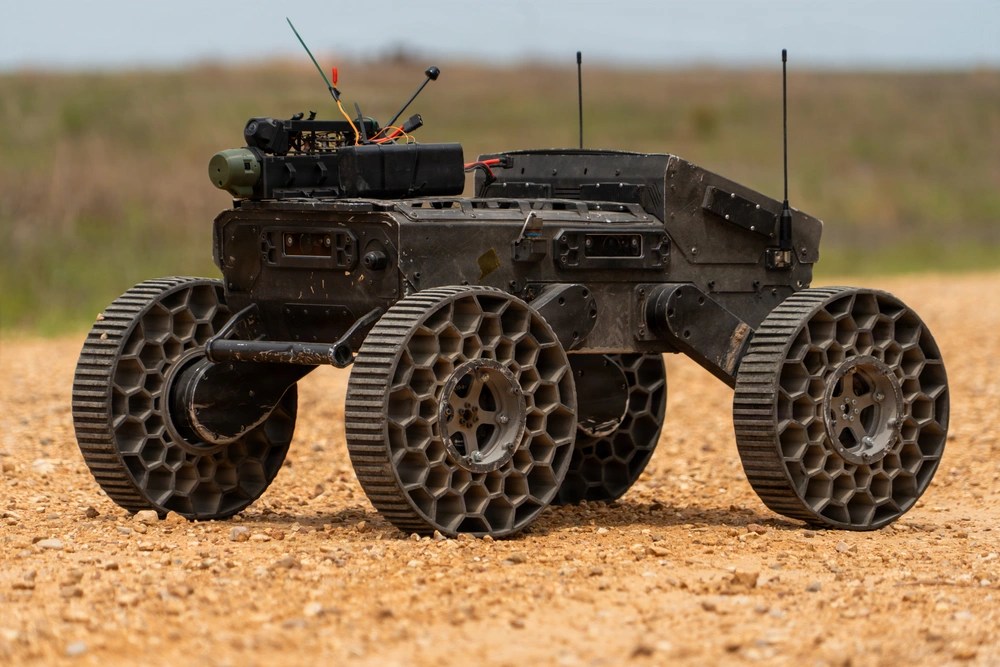
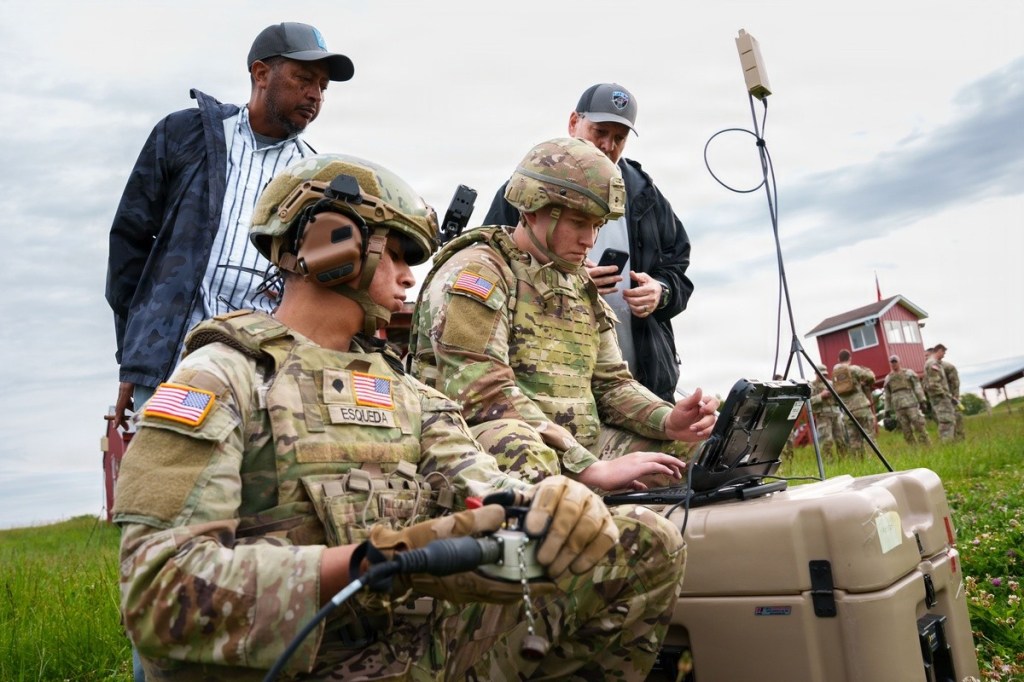
The vehicle is the Azak S26 Stoat, a light four-wheeled unmanned ground vehicle that can run autonomously or be driven on site with a handheld controller. Eagle Troop’s 1st Platoon, based in Vilseck, ran the drill. A simulated casualty was prepared in a trench, carried out and strapped to a board mounted on the vehicle. Sgt. Egan McDermott, a mortarman from 2nd Squadron, walked behind the Stoat with the controller as it took the casualty to the rear. The platoon was fighting an entrenched opposition force on a hill and cleared an enemy trench with paint rounds, and the casualty was moved out minutes before a simulated counterattack.
The night before, McDermott used the same vehicle to haul a 60 mm mortar system, a Bangalore torpedo and other heavy weapons across about five miles of rough terrain with a full combat load. The trip took just over an hour, and he navigated using night vision.
Sgt. Justin Whitlock, Eagle Troop’s senior medic, told the paper it felt like a Call of Duty game, a future-warfare scenario that was happening in real life. He said the platform reduces strain on soldiers by sparing them from carrying stretchers or ammunition boxes over rough ground, which is the practical argument for the whole category. A casualty carry takes several soldiers out of a fight, and a robot that can do the same job leaves them free to shoot, move and treat other wounded.
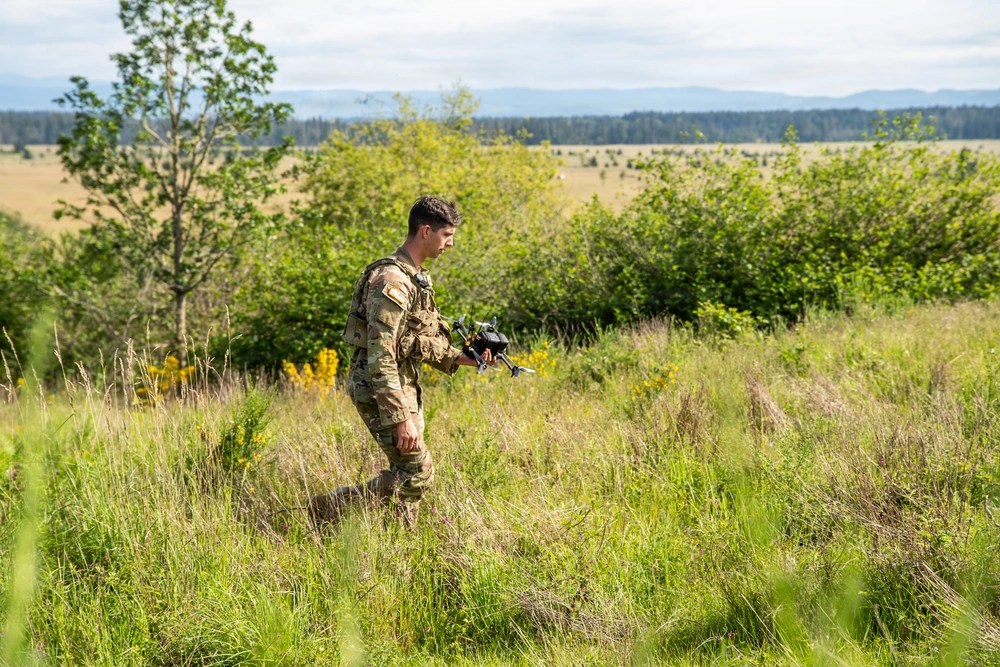
The design is unusual. Each wheel contains a complete electric drive system, with its own brakes, motor controller and battery, rather than one drivetrain inside a central chassis. The wheels are all-terrain and waterproof, and the vehicle keeps operating if two wheels are irreparably damaged or punctured. A wheel can be swapped by unlatching two buckles. In the Army’s configuration the wheels attach to a small frame topped with a board onto which a stretcher, ammunition or a mortar tube can be strapped. Reported figures include a payload well over 500 pounds and a range of 20 to 60 miles depending on load and terrain, and the company says it can carry and launch drones. Those numbers come from the manufacturer and the Stripes report, and the Army has not published test results.
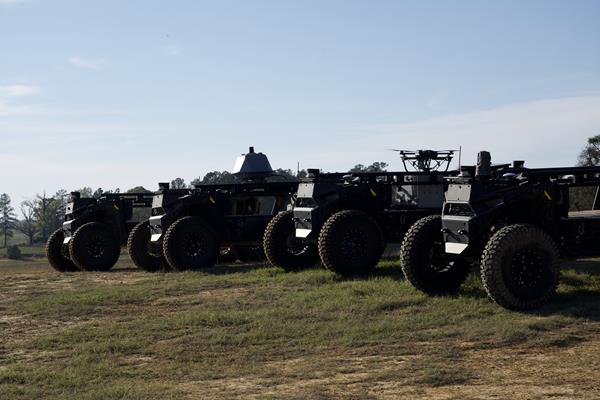
Azak has shown the S26 in other configurations. At the Association of the US Army meeting in Washington earlier this month, Army Recognition reported, the company showed the vehicle as a modular platform able to carry remotely operated firearms and drone-launch payloads. Leonardo DRS has worked with Azak, and during the Army’s Operation Jailbreak earlier this year the vehicles were integrated with technology from several defense companies, including a radar, third-party autonomy software, networking, command-and-control tools and a separate remotely operated counter-drone weapon. The wheel unit is the base, and the mission package on top of it can change.
The rollout is the larger story. Stripes reports, citing the manufacturer, that 2nd Cavalry is the first U.S. military unit to get a wide-scale rollout of the vehicle, through an accelerated Army procurement program. The regiment received the first three of 26 Azak vehicles the previous week through the Global Tactical Edge Acquisition Directorate, a hub designed to put new technology into soldiers’ hands quickly. The article does not say when the remaining 23 will arrive. Ben Meager, Azak’s chief executive, attended the rollout.
What the exercise does and does not show is worth separating. It shows that soldiers can pick up the vehicle quickly enough to use it in a scripted tactical scenario within a week of getting it, and that it handled a heavy night movement over rough ground. It does not show how the Stoat performs against jamming, in mud and snow through a European winter, or when a platoon has to keep it running for weeks. Stripes reported no operational problems, but the drill was a simulation with a friendly opposition force, and a single exercise is a thin basis for judging reliability. The operator also walked behind the vehicle, so the test shows a robot following a soldier, not a robot finding its own way to a casualty under fire.
Ukraine offers the comparison. Its forces have increasingly used ground robots to evacuate wounded soldiers during the war with Russia, and the same week Ukraine said it had evacuated a wounded soldier by aerial drone for the first time. Those are real-war conditions that no training area can reproduce, and they set the standard a 26-vehicle issue to one regiment will eventually be measured against.
The signals to watch are plain: soldier feedback after weeks of use rather than one drill, whether the order grows past 26 vehicles, and whether the Army adds the armed and drone-launching configurations to its evaluations. For now, a medic’s reaction to a robot that carries the stretcher is the clearest evidence of why the Army wants more of them.
Source: Stars and Stripes, October 22, 2026; Army Recognition, October 14, 2026.



Leave a Reply