
By George Kaminsky
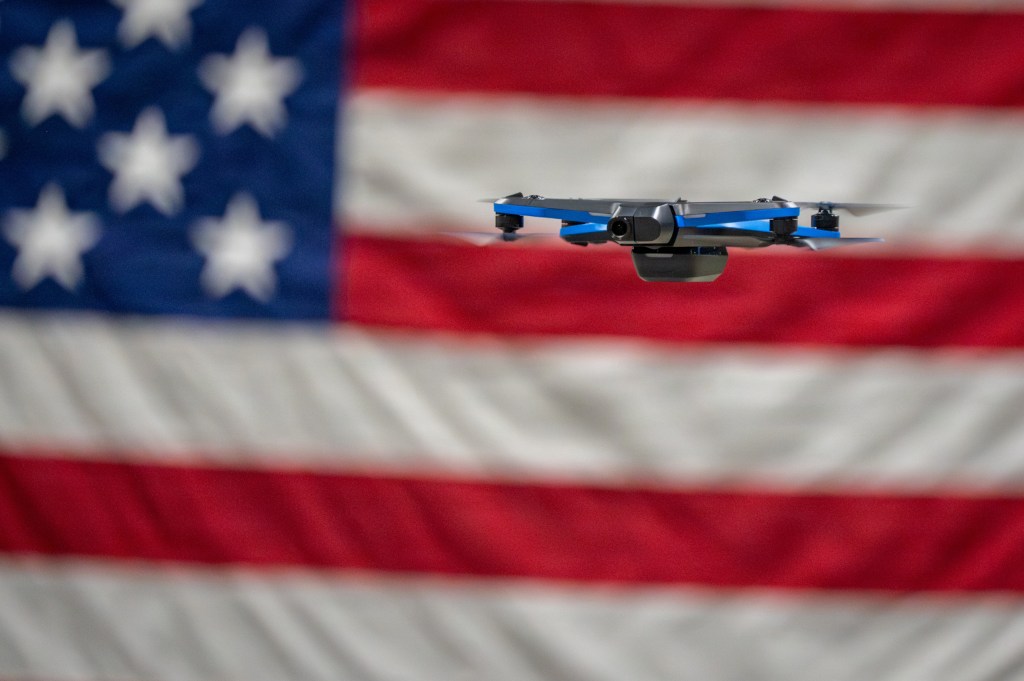
A new Department of War research initiative will try to make ground robots and drones work as one team, and it has a test range, a university and NASA behind it. Sen. John Hoeven of North Dakota announced Project ATLAS on October 13 at the 20th annual UAS Summit and Expo in Grand Forks. The effort pairs the University of North Dakota, NASA, the Department of War and the North Dakota National Guard to fold unmanned ground vehicles and unmanned aircraft into daily training, base support and combat operations.
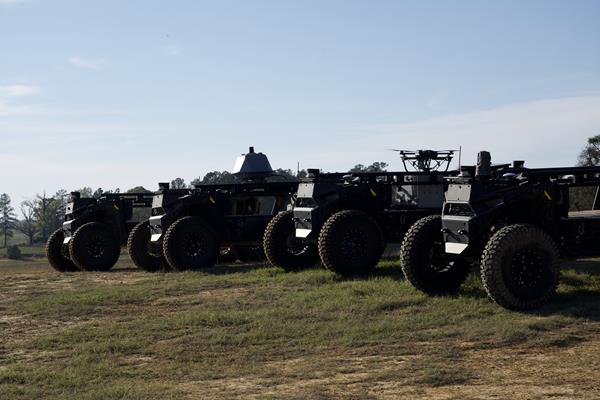
The timing is deliberate. The first job for ATLAS is to pick a ground vehicle, and the field for that choice is assembling this week at the same range the project will use.
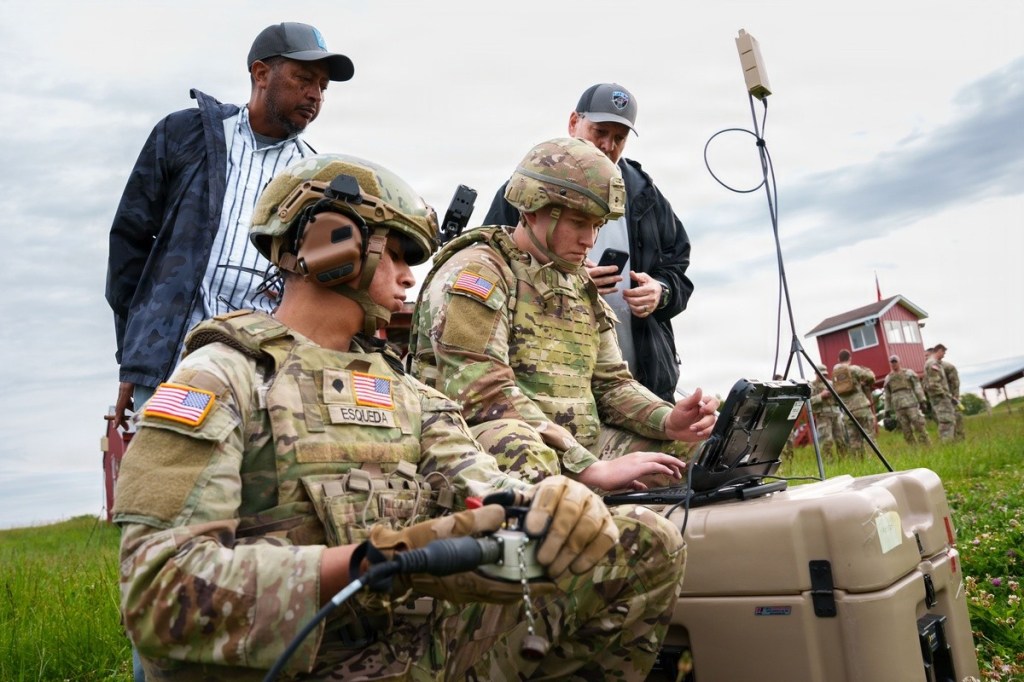
UND will work with NASA to run the experiments. The North Dakota National Guard will provide access to its range at Camp Grafton. Once a ground vehicle is chosen, the team will build experiments that link it to unmanned aircraft, with an early focus on local base security and logistics.
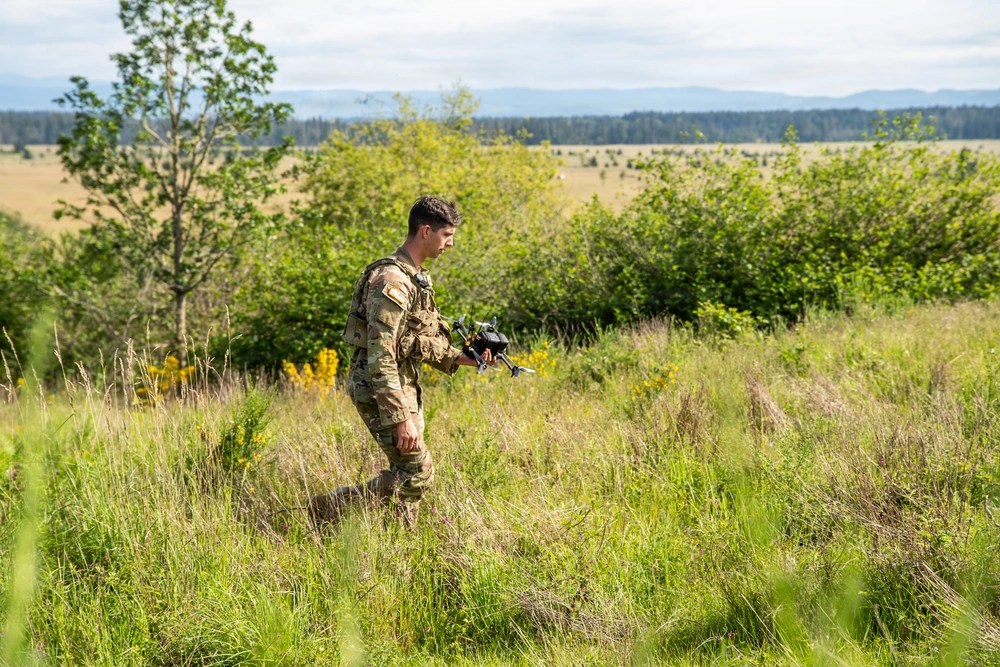
The stated end point is more ambitious than the starting point. Over time, ATLAS is meant to take on harder tasks, building toward a single operator running aircraft and ground vehicles at the same time, with the machines collaborating autonomously. Examples named include helping with maintenance operations, delivering equipment or supplies, and responding to security threats.
That is a different problem from fielding either type of machine alone. A drone can scout a perimeter or a road while a ground vehicle carries loads or holds a position, but making the two share a picture of the situation, hand off tasks and stay under one person’s supervision is mostly a software and integration challenge.
Hoeven, a member of the Senate Defense Appropriations Committee, said he secured nearly 2 million dollars in fiscal 2026 funding to launch the project. Of that, 1 million dollars supports UND and NASA, and 750,000 dollars goes to the Guard for activity at Camp Grafton. He said he is working to secure more for fiscal 2027.
These are research-scale sums, far from procurement money. The project is a place to learn what works before anyone writes a large order.
Hoeven noted that the Department of War will host a joint unmanned ground vehicle demonstration at Camp Grafton, where the capabilities of various vehicles will be evaluated for inclusion in ATLAS. That event is GroundBreaker 1, which the Drone OTA Consortium runs and which has a live hardware phase scheduled for October 19 through 23.
The solicitation behind it sought complete ground vehicle systems and listed several mission profiles: reconnaissance and surveillance, tactical logistics, explosive ordnance disposal and route clearance, search and rescue, force protection and perimeter security, and casualty evacuation. Evaluation runs in three phases, starting with a whitepaper review, moving to a demonstration and live pitch, and ending, by invitation only, in a full technical and cost proposal. Vendors operate in what the notice calls realistic field conditions, with service members giving feedback on usability and mission effectiveness.
Which vendors ATLAS will draw from has not been announced. Hoeven said only that the demonstration will inform the choice. BLADE has said its Hunter WOLF advanced to the live phase, and other participants have not been publicly listed.
Hoeven was joined at the summit by NASA Administrator Jared Isaacman and Gen. Mike Guetlein, the director of Golden Dome for America. He said he invited both to strengthen North Dakota’s role in drone and counter-drone technology and in space operations.
He framed ATLAS as the next step from two decades of work that began in 2006, when he helped fund UND’s Center of Excellence for UAS Research, Education and Training as governor. That ecosystem now includes the Northern Plains UAS Test Site, Grand Forks Air Force Base and GrandSKY. Earlier this year he secured access to the FAA’s unfiltered radar data feed for the test site, which he says makes it the only non-federal entity with that access. He first tied the state’s drone ecosystem to NASA in 2016, through the agency’s research on unmanned traffic management.
The Pentagon has had a harder time bringing ground robots into service than aircraft. Terrain is the reason: a ground vehicle has to cross rough ground and avoid obstacles that a small aircraft simply flies over. That gap is why demonstrations like GroundBreaker 1 exist, and why a program that couples ground machines to aircraft could be useful. An aerial view can help a ground vehicle see around obstacles, and a ground vehicle can carry more payload and stay on station longer than a small multirotor.
Three markers will show whether ATLAS gets traction: the vehicle selected after the Camp Grafton evaluation, the first experiments that actually link the ground and air machines, and whether the fiscal 2027 funding Hoeven is pursuing comes through. Until the first of those lands, ATLAS is a plan with funding and a range, not a fielded capability.
Source: Valley News Live report on the Project ATLAS announcement, October 13, 2026; BLADE announcement, October 8, 2026; Drone OTA Consortium GroundBreaker 1 solicitation, August 2026.



Leave a Reply